Skip to content

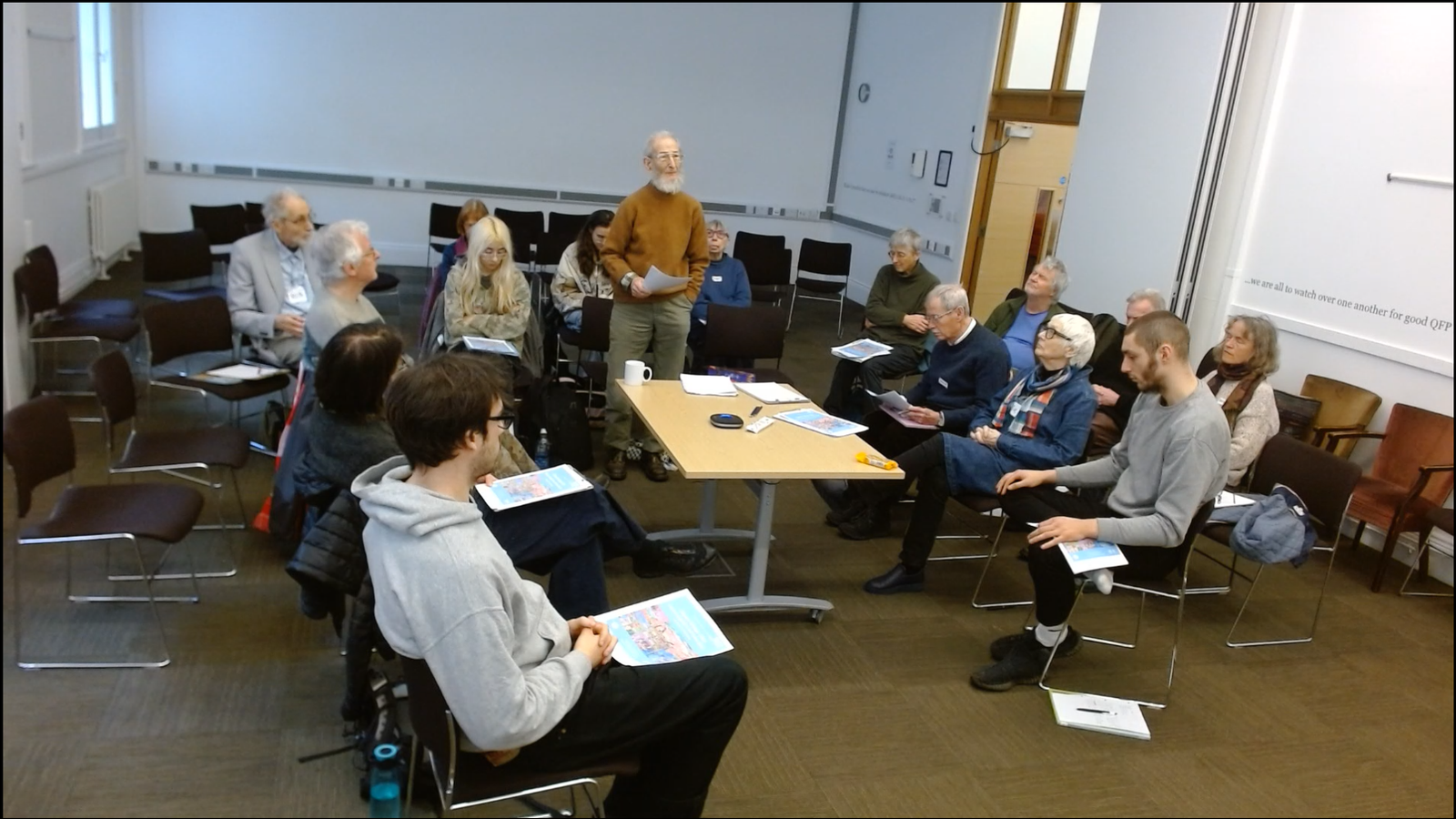
Participants included members of Central Manchester Quaker meeting and the general public.

QUESTIONS EXPLORED IN ‘WET PAINT’ :

How do we relate to the truth’s contained in texts we haven’t read directly?

How does a truth articulated in a text become a condition of our actions? Why does this happen in the case of some texts and not in the case of others?

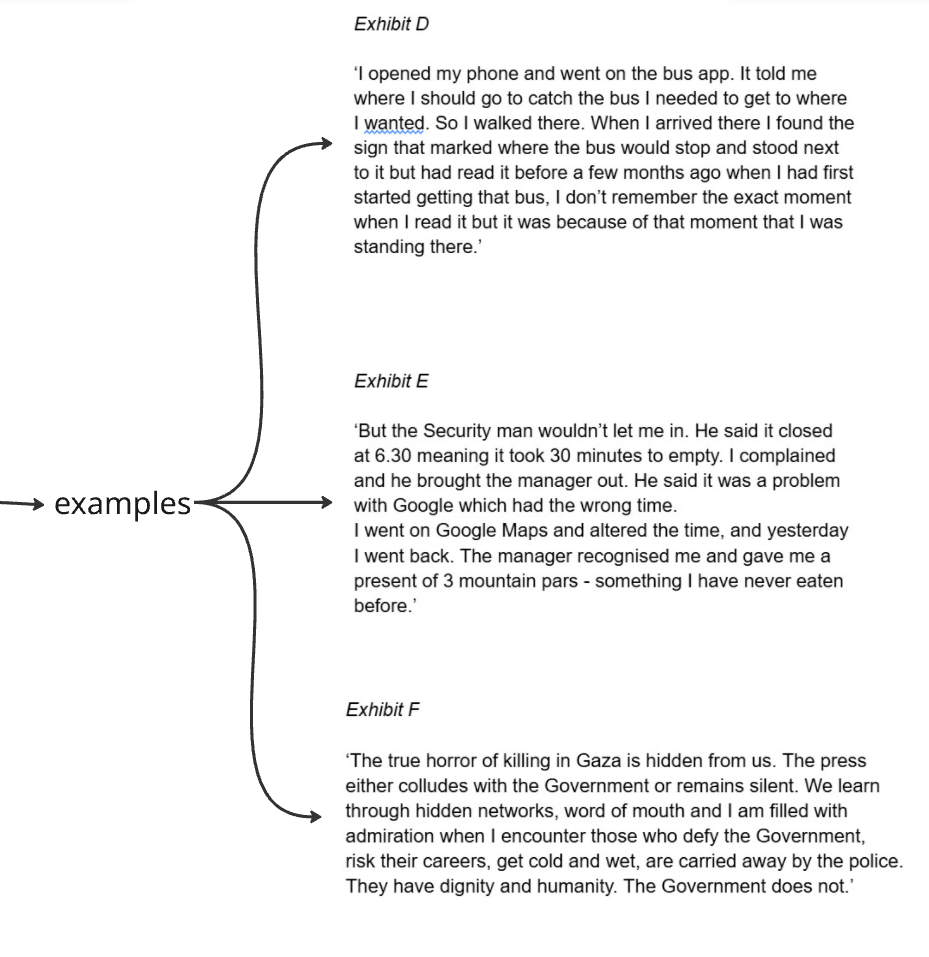
Is it possible to create our own pathways between scientific fact and group behaviour?

Can contemplative practises help us approach political realities?

Introduction

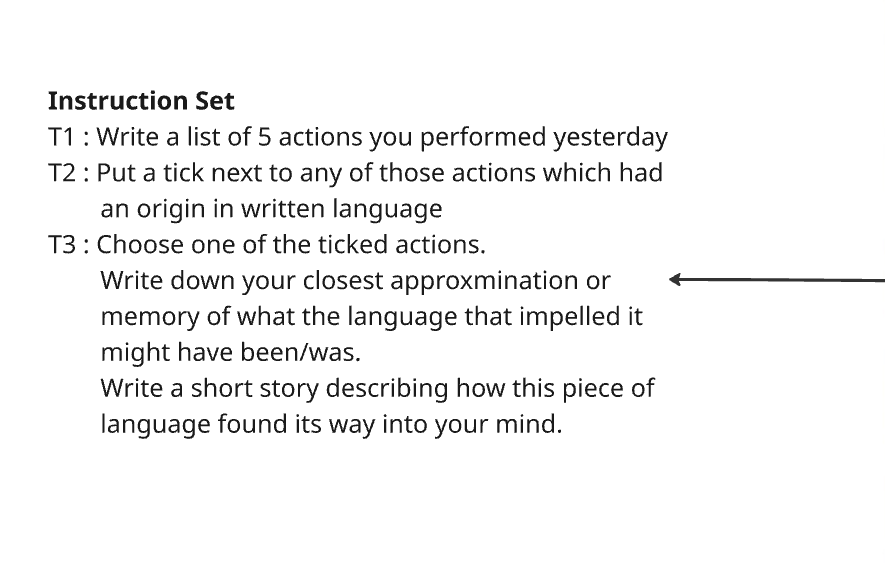
The 5 Actions

(autoplays from 5:59)

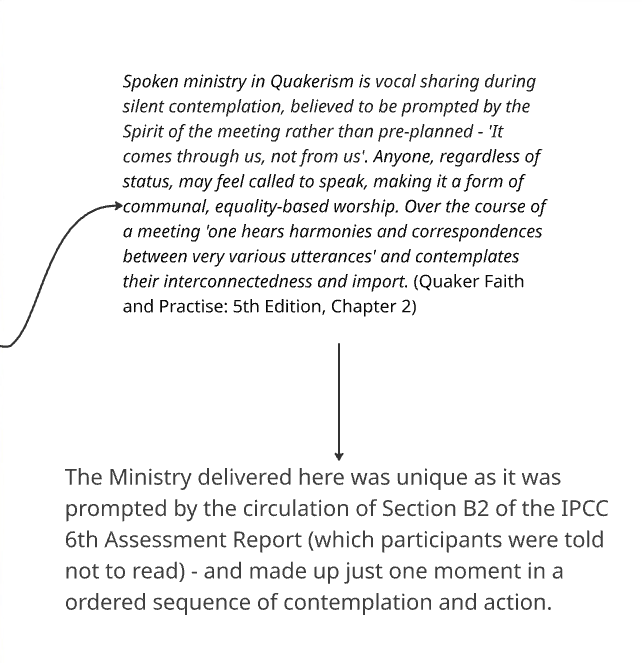
Ministry

(autoplays from 10:06)

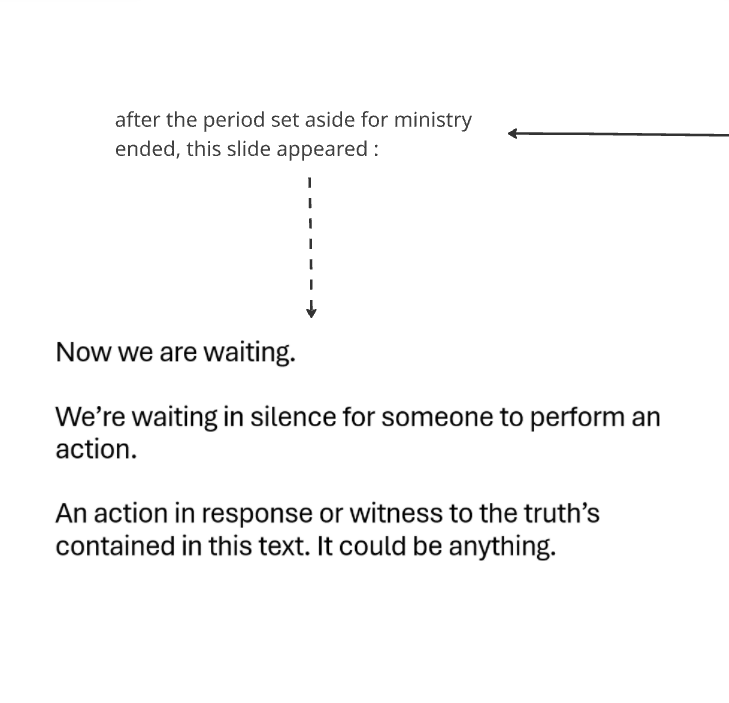
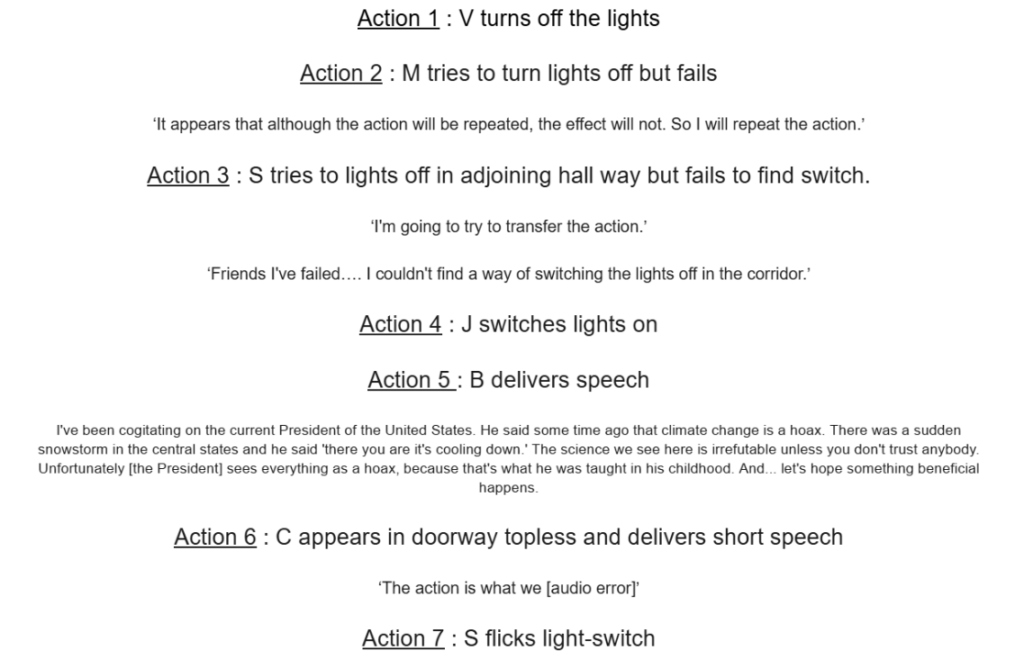
'The Action'

(autoplays from 23:12 – Action is performed at 23:30)

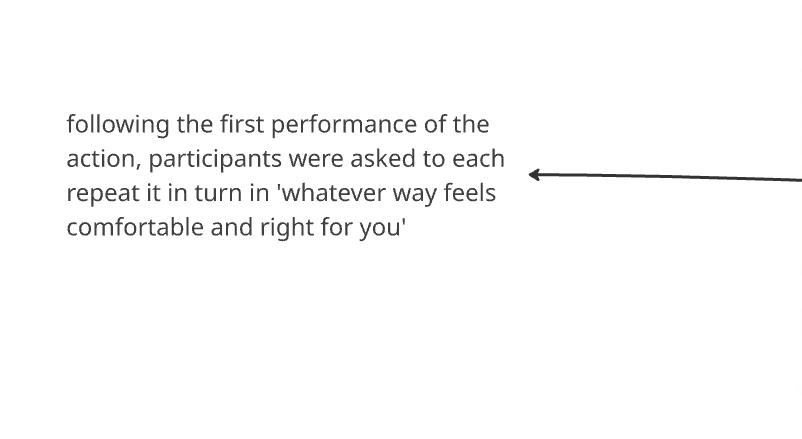
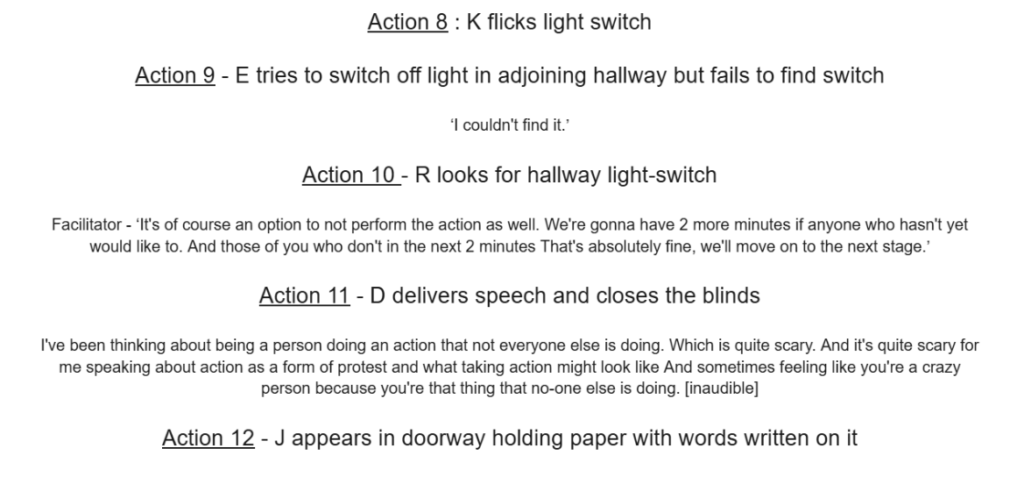
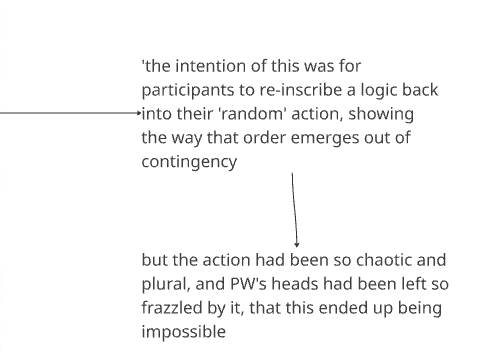
The Splitting of 'The Action'

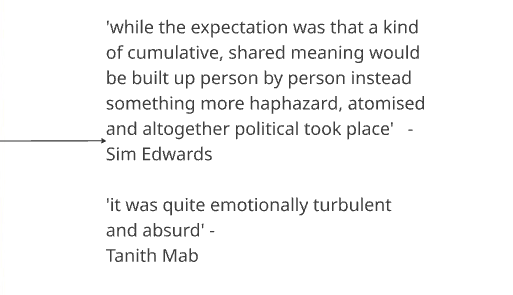
A Retrospective Re-interpretation

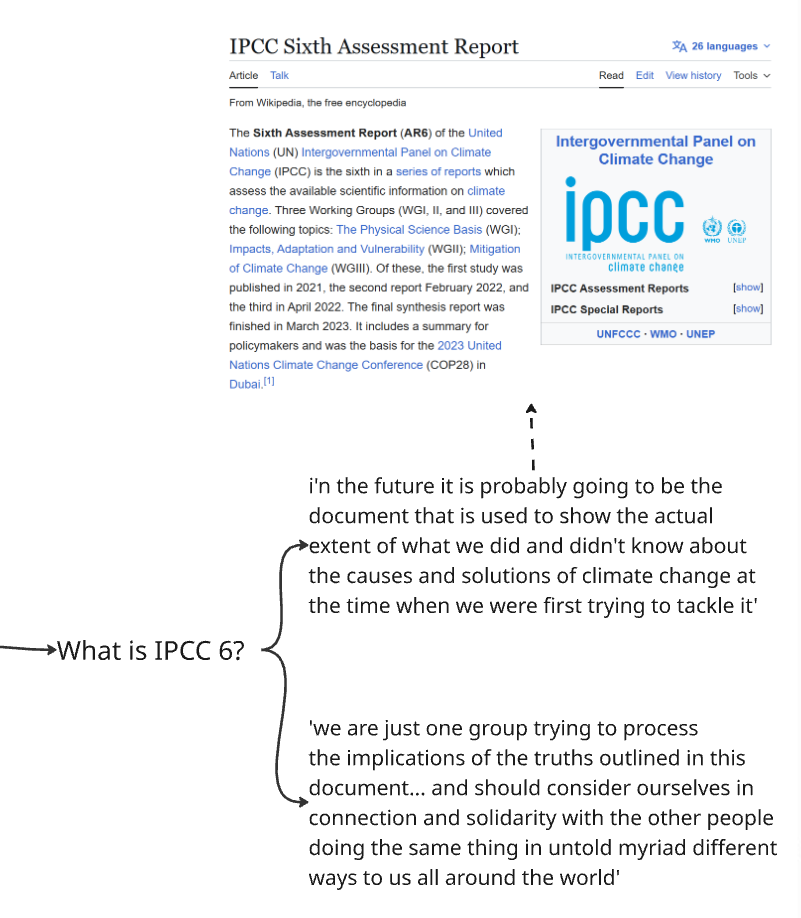
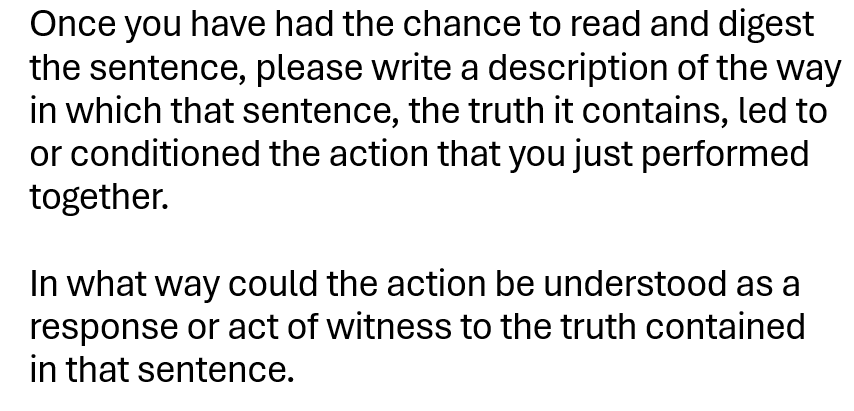
Participants were instructed to close their eyes and point to a random sentence in the document :

then a slide came up saying this :

Epilogue - Group Sharing

(autoplays from 42:33)

Bibliography

  • Britain (2009). Quaker Faith and Practice
  • Empson, W. (2016). Seven Types Of Ambiguity.

  • Freire, P. (1972). Pedagogy of the Oppressed. London: Penguin Books.

  • Édouard Glissant (2025). Poetics of Relation. Random House.

  • A conversational hot take from a friend : ‘the IPCC document is the Hegel to the Marx of the next centuries’ climate activism.’

    ‌And a special thanks to Sue Johnson for her support, and to Central Manchester Quaker Meeting.